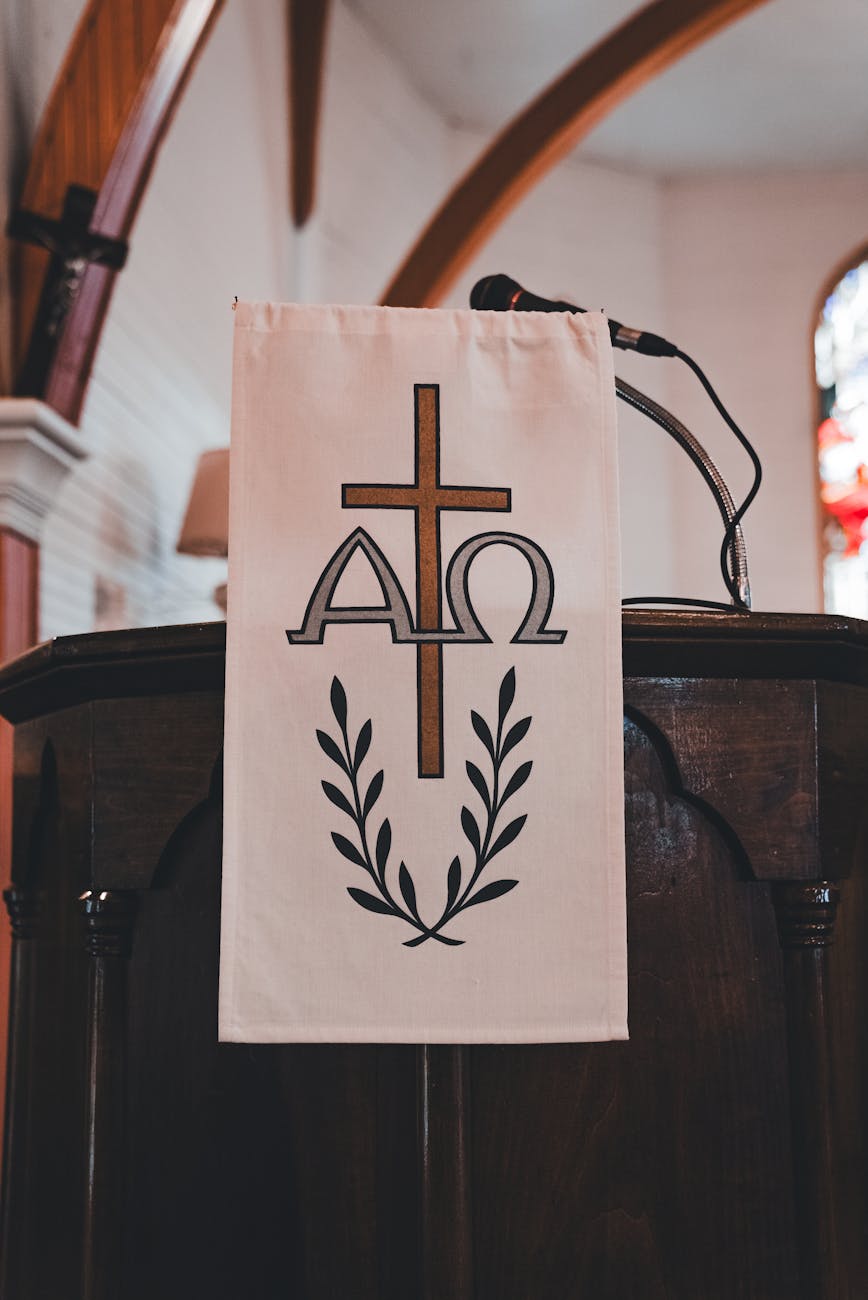
“I am the Alpha and the Omega,” says the Lord God, “who is and who was and who is to come, the Almighty.” (Revelation 1:8 ESV)
It’s difficult for us who live in Western democracies to grasp how subversive a message the gospel is. A warm and reassuring statement like the one above seems rather benign to us. However, to a totalitarian ruler like Caesar, this claim strikes at the core of his fragile hold on power. Who’s rule is supreme? Who sets the terms by which we live our lives? To the people who lived in the Roman province of Asia, everything they experienced screamed that Rome was supreme. The gods, the festivals, the sacrifices, the soldiers, the statues of the Caesars and the temples of the gods were integral in reinforcing Rome’s supremacy in the minds of the people. To bolster their rule the authorities could imprison, torture or even kill at their discretion. When Christians refused to confess Caesar as Lord, but instead swore allegiance to some backwater revolutionary named Jesus, Rome perceived it as a threat to their authority and to the stability of the Empire. Because Rome crushed those who opposed it, most everyone submitted to Roman rule. Rome presented itself as the alpha and the omega, the beginning and the end, of authority and power and of all that was beneficial and good, of life itself. But was Rome’s claim true?
Revelation makes it crystal clear from its opening verses—God is sovereign. While God’s declaration above states it explicitly, the remainder of Revelation depicts it vividly. Through a series of signs and symbols, Revelation asserts that despite appearances God is indeed sovereign over all creation. God is the Almighty. He is omnipotent. His strength no one can match. More precisely he possesses all power. No one exercises power that does not ultimately originate with him. Therefore, Rome’s military might is no power at all before God. Does this mean that Rome will not hurt the church? No. But God’s claim does assure us that God can keep his promises, and that he will win in the end. There is no doubt. God is he who is and who was and who is to come. God is eternal. In the context of Revelation, it means that God ruled before Rome began and God will rule long after Rome is gone. And God reigns in the here and now—a point which is more important than it may first seem. Even though we cannot see God, he is just as real as Rome. He is present, not distant, and he is active—in the affairs of Rome as well as in the affairs of his church.
Throughout Revelation this claim that God is the Alpha and the Omega, the first and last letters of the Greek alphabet, is repeated (21:6; 22:13) as are its equivalents, First and Last (1:17; 2:8; 22:13), and Beginning and End (21:6; 22:13). Our God and our Lord Jesus are transcendent over all things. At a time when all of society’s fortunes or misfortunes were credited to the whims of the gods, the Lord God set himself apart as first and last. He is sovereign over all that will be revealed in this book. He is sovereign over all that will transpire in the life of the church—then and now.
This single statement about God should bring a sense of security and comfort as we face any challenge, any difficulty, any tribulation that the powers of this world and the powers of darkness may send our way. We are God’s children. And though that does not shelter us from trials, there is nothing he cannot do on our behalf. In the end his victory will be our victory. He will protect what we entrust to him.
Almighty God, I praise you for your great and unrivaled power. No nation or ruler is mightier than you. I praise you for your sovereignty over all things from beginning to end. You are the eternal God. While others come and go, you remain. I thank you that you have revealed yourself to me in such great measure that I may confidently and eagerly entrust my life to you. Amen.
 A Revelation Invitation
Leave a comment